
Thoughts
-
OpenAI Reveals the 5 Steps to AGI
Bloomberg reported on OpenAI’s five levels AI must meet to achieve Artificial General Intelligence (AGI). Currently, OpenAI says ChatGPT 4o is at level 2.
- Level 1: Chatbots, natural language
- Level 2: Reasoners, can apply logic and solve problems at a human level
- Level 3: Agents, can perform additional actions
- Level 4: Innovators, can make new inventions
- Level 5: Can do the work of an entire organization
Each ChatGPT release pushes us closer to the next level. ChatGPT 3.5 is level 1, providing a chatbot that could understand and respond to natural human language. ChatGPT 4o, a multimodal model, is level 2, able to reason and solve problems, surpassing human performance on many tests.
The next milestone, potentially with ChatGPT 5.0 in 2025, will be level 3, envisioning an AI acting as an independent agent, able to read emails, understand content, and perform tasks without direct human prompting.
Level 4 aims for innovation, where AI not only learns but also creates new ideas and solutions.
Level 5 represents the ultimate goal, where AI can manage an entire organization, handling multiple tasks and actions autonomously. Think of Rosy from “The Jetsons” managing a home—scheduling, cleaning, cooking, and maintaining order without human intervention.
Sam Altman, CEO of OpenAI, suggests that we might achieve AGI before the end of the decade. Who knows what ChatGPT 7 or 8 might bring? All before 2030.
-
Creating Virtual Worlds with Text-to-3D
Meta’s announcement of text-to-3D is an obvious next step in the company’s mixed reality goals. For a few months, I’ve used an AI tool named Meshy that allows you to create 3D assets and export them as USDZ files. Once in this format, it’s easy to grab and manipulate these 3D assets on Apple Vision Pro or Meta Quest as real-world AR objects.
This announcement is just the start of some cool social media capabilities in Meta’s Horizon environment, allowing you to create virtually anything from photos or text and transform them into 3D objects you can wear.
Imagine uploading a favorite dress, pair of shoes, or a weapon from a cartoon and instantly converting that object into a 3D object you can mount in a 3D environment or place on a virtual avatar. It’s early days, but bit by bit, the groundwork is being laid to make all of this possible.
 Meta shows off ‘3D Gen’ AI tool that creates textured models faster than ever.Meta’s AI research team has a new system to create or retexture 3D objects based on a text prompt. It combines text-to-3D and text-to-texture generation models to go beyond AI-generated emoji or still images, Their paper (pdf) claims 3D Gen’s output is “3× to 60× faster” and preferred by professional artists in comparison to alternatives.
 -
Would You Sell Your Digital Self?
On his death, Wendy’s founder Dave Thomas gave the company the right to digitally recreate him for ads. In 2002, that seemed crazy, but today, de-aging tech and body scans have reached a point where reality and fiction have blended.
ElevenLabs recently announced a deal to buy the voice rights of deceased celebrities from their estates, allowing companies to pay to use their voices for various projects, like audiobooks.
With AI recreations of Marilyn Monroe and hologram 2Pac at concerts, it’s possible to imagine artists who, through their estates, continue to create music, act, and write books through digital avatars long after their death.
Should this be normalized? Would you sell the rights to your digital self to help provide for your family after you leave?
-
When Solar Companies Go Dark
Earlier today, I mentioned a car becoming a brick, but another place where this phenomenon is playing out is with solar power. Solar companies have had a tough time lately, as have many businesses in the face of rising interest rates. The unexpected consequence is that people who own solar panels can’t get the hardware maintained.
Thankfully, many of these systems are built to work when the power is off and Internet connectivity is impossible. However, some of the more advanced solar panels I’ve considered for my home include numerous IoT or connected features that need the power of backend services to function properly.
Maybe companies that offer connected devices or warranties should be required to save money to fund these systems in their untimely demise?
-
When Your Car Becomes a Brick
Almost any device you buy today is a connected device that is essentially bricked without servers and the Internet. I’ve mentioned the pain this can cause when businesses fail and instantly your speakers, home automation, or other products just stop working.
As our toys get bigger, the stakes of what this means get higher. Take the recent bankruptcy of EV car maker Fisker. Some of the car’s features need access to online services to work, and some features require OTA (over-the-air) updates to get enabled. While cars from old, non-existent brands like Saturn can run today with no issues, a Fisker and other connected cars have much more complex software that stands to limit what’s possible when and if the company shuts down its services.
It’s not uncommon for today’s cars to respond to recalls by releasing software updates that fix issues. Fisker has made it clear that it can and will not provide any updates beyond its recently released version 2.1 update. That has to be a hard pill to swallow after spending $70k on a car that is now valued for 14k.
-
Tesla lays off Supercharger team
Man, this is the dumbest decision I’ve seen.
I test-drove many EVs before deciding on getting a Tesla Model 3, and the deciding factor was unquestionably the supercharger network. It is the best in the US and a huge differentiator for Tesla.
Even if the supercharger network diverted resources from the company’s core goals, there were better alternatives. Selling or, better yet, spinning off as a JV could have preserved the invaluable institutional knowledge of the 500-person team.
Keep in mind that this is the same team that just convinced every US car maker to make NACS the Tesla Charging standard the de facto US standard. In doing that, they opened the company to receive cash from Biden’s NEVI program. They’re getting free cash from us and the US government to expand this network.
If you see something I’m missing, please let me know in the comments, but this single move seems like the best way to destroy one of the company’s best competitive advantages.
-
Tic Tak Yo
Read more →To play the game, tap the text below that says Play Now, and enjoy! Play Now – – – – – – – – – Play Again Fully AI-generated MVP from this sketch I did of an MVP application.
-
Thoughts on Tech & Things New AI Album
Be sure to check out the full album on Soundcloud!
-
Anthropic Drops Claude 3
Anthropic has just released a set of improved AI models, the Claude 3 family. As a long-time fan of Claude, I couldn’t be more excited to kick the tires and see how it compares with OpenAI’s ChatGPT 4. Anthropic claims that Claude 3 is just as good as, if not better than, its rival ChatGPT 4. Of course, marketing speak is one thing, and the real proof is always in the pudding.
I’m eager to put the Claude 3 family through its paces and taste test this latest offering from Anthropic. Claude has been my favorite AI model for a while now, consistently impressing me with its performance and capabilities.
 Introducing the next generation of ClaudeToday, we’re announcing the Claude 3 model family, which sets new industry benchmarks across a wide range of cognitive tasks. The family includes three state-of-the-art models in ascending order of capability: Claude 3 Haiku, Claude 3 Sonnet, and Claude 3 Opus.
 -
Apple responds to the EU and Spotify
Apple’s pissed. The closest thing I can remember to this is Steve Jobs’ open letter “Thoughts on Music” in 2007 – but this, this is something very different. You can feel and hear the tone of Apple and tell how upset they are about not only the 2 billion euro fine but also their continued battle with regulators in the EU.
At the heart of their argument is that Apple provided the hardware, software, and services that helped companies like Spotify become what they are. Yet, Spotify does not pay Apple for the use of most of the services they use to deliver a product on their platform. It’s true and really leans into the larger question of how much Apple or any company can squeeze value from their platform.
I know it’s a different business, but lately, I’ve come to think of the App Store as similar to credit cards. Credit card companies charge a fee, ironically named a discount, to retailers per transaction. Still, to most customers, the privileges of using a card are not only free but sometimes rewarded with discounts, points, or other benefits. Similarly, developers pay Apple to be in the App Store and pay fees on their sales, which Apple uses to provide its customers with a growing set of subsidized services like free operating system upgrades to the latest version of the iPhone. For Apple, what’s at stake is how they monetize the App Store and the iPhone, iPad, and other devices to provide other services we as customers see as free – like points on a credit card.
Of course, what makes this tough is that Apple Music competes with Spotify, and for Spotify to pay its competitor a 30% cut of its subscription payments makes it hard to compete directly on price. I think the question is not just about how Apple makes money from the App Store but also how owning the App Store allows it to prop up its other business interests, like Apple TV+ and Apple Music that can compete in the same stores as its competitors but without the cost burden.
-
My Thoughts on Zuckerberg’s Apple Vision Pro Review
If you told me Meta, formally Facebook, would be a leader in pushing open standards for AI and Mixed Reality, I would have called you insane, but here we are. Mark Zuckerberg offered his review of Apple Vision Pro and made some excellent points. I also stated in my newsletter last year that Meta really needed a true competitor in the mixed reality space – the Android to Apple’s iPhone.
I own a Meta Quest 2, but have only trialed the Meta Quest 3, and I found both devices to be fantastic. Meta Quest was revolutionary as the first non-hobbyist portable headset that broke free from reliance on a gaming computer or console. I loved it initially and used it every day for maybe 2 weeks, but then it ended up in a drawer only to pop out occasionally as a party favor.
Looking back, the device itself was great, but the app ecosystem was lacking; most of the content felt like game demos rather than full experiences, lacking that killer app to make me want to keep using it.
Apple Vision Pro has taken a different approach from the start, promoting itself as a productivity device that can also do entertainment or gaming. Most of Apple’s ads and demos show people using it in work or home settings, compared to Meta’s vision of walking through a social media metaverse or battling blocks with lightsabers. Meta Quest felt like an extension of my game consoles, whereas Apple Vision Pro feels like an extension of the Mac.
This, for me, is the key difference: Apple Vision Pro, from day one, leveraged the mature iPad ecosystem with access to tons of apps like Slack. I could use my Mac and external keyboard seamlessly – it just worked. The Apple TV app surfaced shows I liked, and between apps like Disney Plus and Crunchyroll I could watch what I wanted. Apple scratched a productivity itch I didn’t know I had while leaning into their tightly integrated ecosystem.
Zuckerberg is right that Meta Quest has strengths, but the missions of the two companies have differed from the start. Now that each has a direct competitor, I’m excited to see the next generation of devices push the category forward.
-
Vision Pro Apps Lag at Launch
Apple’s Vision Pro has sold an estimated 180,000 pre-orders, but Techcrunch reported that developers have built only 150 native apps. This comes after news that major companies like Netflix, YouTube, and Spotify are not making apps available, pushing users to their websites. Across online developer forums, discontent is growing over Apple’s tighter control. Some claim the lower turnout of developer boycotts is underway.
At first, I assumed prior hardware launches like the Apple Watch and Apple TV probably had similarly low initial app numbers. But in fact, the Apple Watch debuted with 3,000 apps, and Apple TV had 500 at launch – far more than the Vision Pro.
That said, I’m still not convinced developers are outright boycotting the device. Many I’ve talked to assume initial Vision Pro sales volume likely only reaches the mid hundred thousands instead of the multi-millions Apple typically sees. That makes the return-on-investment for developing apps less straightforward. Developers also want to try the augmented reality headset firsthand before deciding whether specialized apps suit the user experience.
In the end, only time will tell if developers get behind the promising but untested Vision Pro platform. Apple getting devices out to early adopters could demonstrate possibilities and inspire developers to be creative. As an eager soon-to-be owner ready to explore this technological future, the potential can’t fully be judged until these revolutionary glasses are unleashed.
-
I think Meta might really get AI
If you missed it, Mark Zuckerberg dropped a few updates on AI to Instagram.
I must say, Meta has pleasantly surprised me in 2023. After years of feeling like an overbearing data collector leveraging questionable tactics with a cool but niche VR subsidiary, Meta’s pivot toward AI suddenly aligned perfectly with its strengths.
Meta’s LLaMA-2 ranks among the top LLMs and is accessible for custom deployment beyond competitors’ walled gardens. Intriguing research into video generation AI like Emu, text-to-speech tools, and its impressive image generator rival competitors. And Meta’s social data riches provide unmatched real-world training data to drive strikingly conversational bots — I interviewed its sports expert Bru modeled after Tom Brady.
Mark Zuckerberg’s latest open-access AI comments make promises that could cement Meta as a uniquely collaborative player compared to increasingly closed systems like OpenAI and Anthropic’s Claude. Combined with its research in personal assistants and the surprisingly great object-detecting Ray-Ban glasses rollout, Meta seems poised to lay an AI foundation leading the next computing era.
A new age of ambient computing is hatching with Meta an exciting contender. Its next chapter could bring encouraging surprises benefiting both consumers and company, even if warranted user data concerns remain.
Check out his post on Instagram.
 Mark Zuckerberg on Instagram: “Some updates on our AI efforts. Our long term vision is to build general intelligence, open source it responsibly, and make it widely available so everyone can benefit. We’re bringing our two major AI research efforts (FAIR and GenAI) closer together to support this. We’re currently training our next-gen model Llama 3, and we’re building massive compute infrastructure to support our future roadmap, including 350k H100s by the end of this year — and overall almost 600k H100s equivalents of compute if you include other GPUs. Also really excited about our progress building new AI-centric computing devices like Ray Ban Meta smart glasses. Lots more to come soon.”61K likes, 4,899 comments – zuck on January 18, 2024: “Some updates on our AI efforts. Our long term vision is to build general intelligence, open sourc…”
 -
Apple’s Vision Pro is available for preorder tomorrow morning!
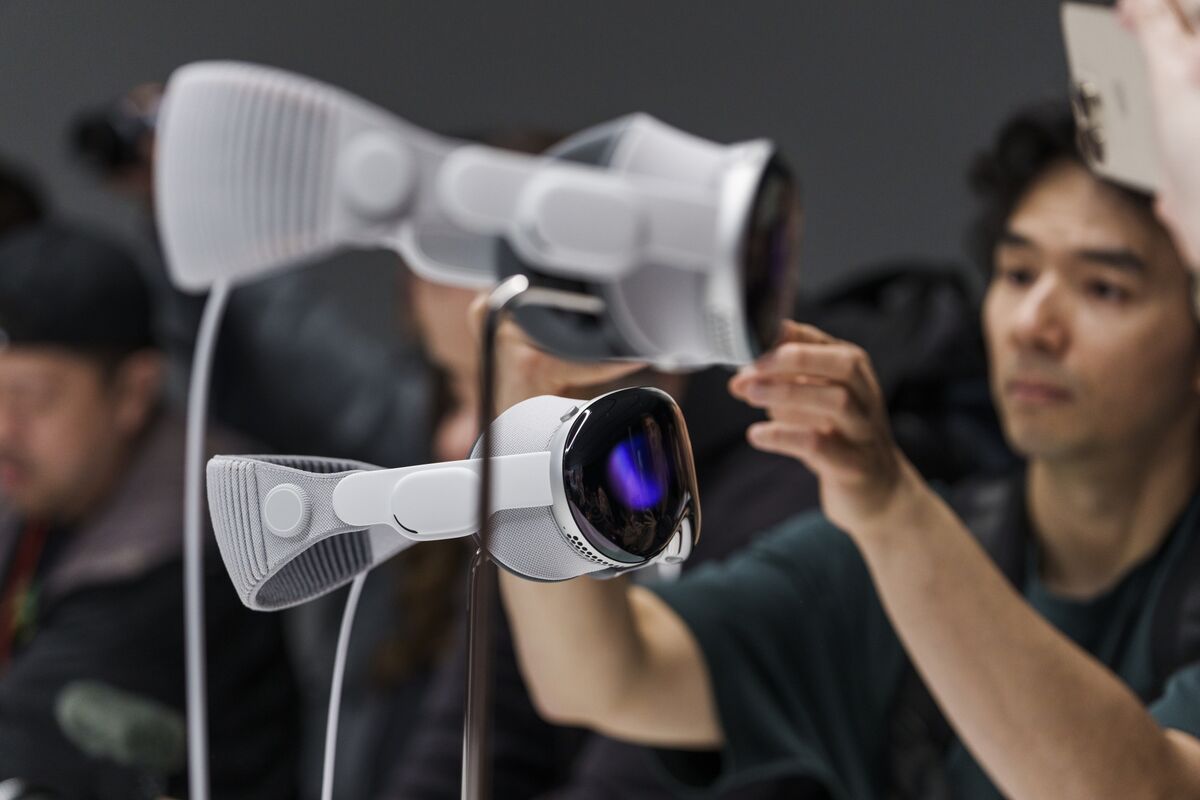
The long wait is almost over. Tomorrow morning at 8 AM EST and 5 AM PST, the Vision Pro will be available for order, and it will hit stores on Feb 2nd. There’s still a metric ton we don’t know about these devices, but Apple invited a few folks such as The Verge, Engadget, and Daring Fireball, to preview the headset:
- It’s heavy. Thoughts varied on comfort after a 30-minute session, but all agreed you can feel the heft.
- The on-screen keyboard is usable in small doses.
- You can stand and move, but environments keep you from wandering too far.
- Spatial video recorded from an iPhone 15 looks amazing (best with limited motion).
- Disney has a day-one spatial app in beta with movie Easter eggs.
- No other VR/AR headset compares for seamlessly integrating real and virtual worlds – from camera lag to resolution.
These pre-reviews focus on entertainment so far. We’ll have to wait and see how well it handles productivity and tasks like Zoom calls with your digital persona. I’m sure more in-depth reviews are coming next week. I can’t wait to get my eyes inside these!
-
Is AI’s “Great Artists Steal” Ethos Genius or Theft?
In OpenAI’s legal challenge with the New York Times, its lawyers echoed my belief: creating useful AI is virtually impossible without leveraging copyrighted source material.
This intersects with a pivotal question — where does today’s narrowing fair use doctrine end as infringement begins in the digital age? My 2023 piece “Originality” tackled dilemmas around AI rapidly synthesizing cultural works to forge new directions.
I’ve long argued all expression – AI or human – derives from influences. Musicians riff familiar instruments created by others. Fantasy tales borrow mythical beings like elves traced back centuries. As Steve Jobs put it, “great artists steal.”
My take? Generative AI follows the same “derivative” creative process as people. By digitally synthesizing books, news and tweets at lightning speed, it takes innate human creativity to dizzying new levels. But will limiting its access to only public domain scraps knee-cap realizing AI’s full potential?
Overly expansive rights now threaten to divide human and machine ingenuity. As creators navigate IP minefields, they become less adventurous. More concerned about litigation than creation. This inhibits the technological leaps that fuel cultural progress.
-
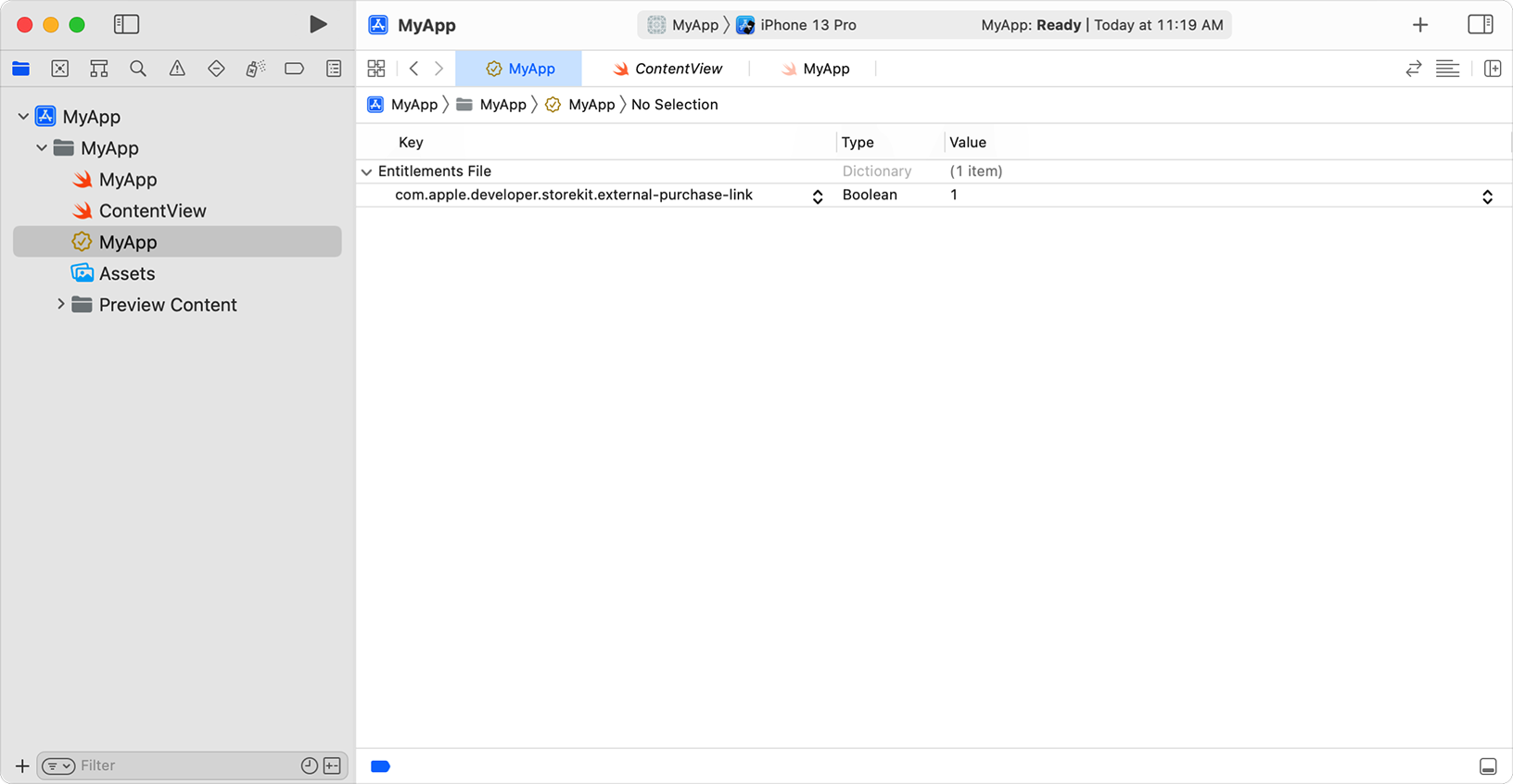
Mobile devs now hold the keys to sidestep Apple’s infamous “App Store tax.”
After years locked in Apple’s walled garden requiring In-App Purchases (and surrendering 30% of revenue), the supreme court decided not to review Apple vs Epic – finally giving developers an alternative payment option. But this hard-won concession rings hollow.
While Apple now allows external purchase links bypassing its payment system, it still demands a 27% commission! Devs migrating transactions outside iOS only save 3% for handling transactions, which may not cover the costs like fraud that Apple previously handled. For most, that paltry savings won’t justify the extra work.
Of course, those with existing e-commerce can leverage it without needing to build In-App Purchase (IAP) functionality from scratch. But for small devs already relying on IAP, Apple’s “choice” offers meager relief.
-
Coming Next Week: An App Store of AI Assistants Powered by OpenAI
Guys and gals, this is huge. If you forgot, back in November at OpenAI’s Dev Day, Sam Altman announced a store full of trained assistants set with personalities and fed with data of your liking that the creators could charge for. That was quickly shelved after a crazy holiday week, but now the company is ready to launch its GPT store.
With this, an author or expert can write a GPT and feed it the contents of books, notes, essays, or whatever information they might think is valuable to create knowledgeable GPTs others can tap into and pay to use.
I have to say I’ve been super impressed with the ability of OpenAI’s assistants to do a lot with little actual development – and you can see my own examples of bots on my AI playground and lab at labs.jasonmperry.com. I have a fuller write-up on each of these assistants on my blog, but it’s worth testing out to see how powerful these things can be.
Next week, companies with vast amounts of data can put that data to work as assistants; others can plug them into their systems for a price to gain immense amounts of knowledge into their applications. Just imagine an internal HR assistant powered with all the contents of SHRM, the Society for Human Resource Management for HR, or an assistant for doctors powered by scholarly articles from the American Heart Association – and these associations can earn money for sharing this data.
This is a fascinating next step in our collective AI journey, and it has the potential to let experts monetize their knowledge if they choose to.
-
Introducing my AI Playground and Lab
Read more →I’m excited to open up my little corner of the web I’ve been tinkering with – an AI sandbox to easily compare and play with various conversational assistants and generative AI models. This web app, located at labs.jasonmperry.com, provides a simple interface wrapping API calls to different systems that keeps experimentation tidy in one place. […]
-
Can Apple’s WWDC 2024 Redeem Siri?
This year will be the breakout for AI-powered digital assistants. While Alexa was amazing when first released, assistant evolution has been painfully slow—only handling structured commands rather than complex, contextual requests. But 2024 stands to change that as platforms integrate sophisticated generative AI.
Rumors suggest Apple will unveil show-stopping updates to Siri using generative AI at WWDC, and I would guess that the next iPhone blends custom silicon with privacy focused on-device small language models, that reach out to cloud large language models for more complex queries. A truly conversational Siri with deep access to your calendars, contact lists, HomeKit, and more would be something truly transformational – add in the ability for that same AI to move with you from iPhone, iPad, HomePod, and Mac and help you with content generation in your own voice in apps like email, Pages, and Numbers and you got a very powerful assistant.
The rumor also says Apple charges a subscription for these premium features which could be worth it if its a premium Siri deeply integrated into their app suite. But I gotta say a new monthly fee is the last thing I’m looking to add.
-
My interview with Bru, Meta’s AI chatbot
Read more →I did an in-depth interview with Bru, one of Meta’s AI bots. We talked about all types of things, from dad jokes, Saints, and kids’ sports to the best places to watch sports in Orlando. Just in case you’re not aware, Bru is one of twenty-eight AI characters modeled after real-life humans, and Bru has […]







/cdn.vox-cdn.com/uploads/chorus_asset/file/25141373/Command_Line_Site_Post_Open_AI.jpg)
