Thoughts
-
The Worst It Will Ever Be
Read more →One thing I often say in my talks is that this version of AI you’re using today is the worst it will ever be. It’s not a knock—it’s a reminder. The pace of progress in AI is staggering. Features that were laughably bad just a year or two ago have quietly evolved into shockingly capable…
-
Rise of the Reasoning Models
Read more →Last week, I sat on a panel at the Maryland Technology Council’s Technology Transformation Conference to discuss Data Governance in the Age of AI alongside an incredible group of experts. During the Q&A, someone asked about DeepSeek and how it changes how we think about data usage—a question that speaks to a fundamental shift happening in AI. When I give talks on…
-
Writing an AI-Optimized Resume
Read more →Earlier this week, Meta began a round of job cuts and has signaled that 2025 will be a tough year. But they’re far from alone—Microsoft, Workday, Sonos, Salesforce, and several other tech companies have also announced layoffs, leaving thousands of professionals searching for new roles. In the DMV (DC-Maryland-Virginia), the federal government is also facing unprecedented headwinds, with DOGE taking the lead on buyout…
-
Maps Are Much More Than a Pretty Picture
Read more →It’s easy to forget just how decisive and contentious the topic of maps can be. I’m reminded of The West Wing, Season 2, Episode 16, which perfectly captured how something we often take as fact can quickly turn on its head. If you haven’t seen it, watch this snippet—I’ll wait: This episode came to mind…
-
I Read the DeepSeek Docs So You Don’t Have To
Read more →DeepSeek is turning heads in the AI world with two major innovations that flip the usual script for building AI models. Here’s the gist: Skipping the Study Phase (Supervised Fine-Tuning) When you train an AI model, the usual first step is something called Supervised Fine-Tuning (SFT). Think of it like studying for a test: you…
-
DeepSeek is redefining the AI race
The juxtaposition of OpenAI and DeepSeek is striking. OpenAI recently announced a deal worth up to $500 billion to build the compute infrastructure required for the next generation of AI models. Meanwhile, DeepSeek, based in China, has developed a competitive AI model on the cheap with a ban that limits their access to the latest and greatest GPUs from Nvidia GPUs.
This contrast is a wake-up call. Meta is reportedly scrambling to understand how DeepSeek managed to achieve this feat, which could upend the competitive landscape in AI development, and OpenAI launched Operator a $200 a month product while DeepSeek is free and open source.
For investors, these developments raise critical questions: Are AI companies overvalued, or does this level of innovation suggest a faster-than-expected path to commoditization for large language models (LLMs)? The race to define the future of AI is accelerating, and the stakes couldn’t be higher.
 DeepSeek R1’s bold bet on reinforcement learning: How it outpaced OpenAI at 3% of the costDeepSeek R1’s Monday release has sent shockwaves through the AI community, disrupting assumptions about what’s required to achieve cutting-edge AI performance. This story focuses on exactly how DeepSeek managed this feat, and what it means for the vast number of users of AI models. For enterprises developing AI-driven solutions, DeepSeek’s breakthrough challenges assumptions of OpenAI’s dominance — and offers a blueprint for cost-efficient innovation.
-
You’re Not (actually) Following Trump or Vance…
During the Obama presidency, a key question arose: What happens to a president’s social media followers when they leave office? As the first “social media president,” Obama implemented a solution—creating official accounts like @POTUS and @VP that transition with each administration to maintain continuity in communication.
This week, those same accounts shifted from Biden and Harris to the new administration. So, if you woke up wondering why your feed now features Trump or Vance, here’s your reminder: official accounts follow the office, not the individual. If you want to keep up with the person, make sure to follow their personal or campaign accounts instead.
And no, Facebook isn’t forcing you to follow Trump. If you saw him in your feed, it’s likely because you were already following the official accounts tied to the White House.
-
$100 Billion AI Initiative Unveiled at the White House
The White House announced a $100 billion initiative—potentially scaling to $500 billion—led by OpenAI to build data centers across the U.S., starting in Texas. This massive effort establishes a new company named Stargate, a partnership between OpenAI, SoftBank, and Oracle. To mark the announcement, SoftBank Chief Masayoshi Son, OpenAI CEO Sam Altman, and Oracle Co-founder Larry Ellison joined President Trump at the White House.
Just minutes before the announcement, Microsoft revealed it had altered its exclusive agreement with OpenAI to grant “right of first refusal” on new cloud computing capacity. This change addresses a challenge for OpenAI, which has faced delays in product releases due to a lack compute resources for building larger, more powerful AI models.
My guess? This move lets Altman tap into Oracle and other cloud platforms, potentially pushing out ChatGPT-5—or even AGI (Artificial General Intelligence)—sooner than we imagined. -
🔍 Robots.txt: The Web’s Silent Gatekeeper
Ever wonder how websites control what’s searchable? Enter the robots.txt file—a simple tool now at the center of big changes in the AI world. Curious about its growing impact? Check out this video to learn more about how this impacts the future of the internet.
-
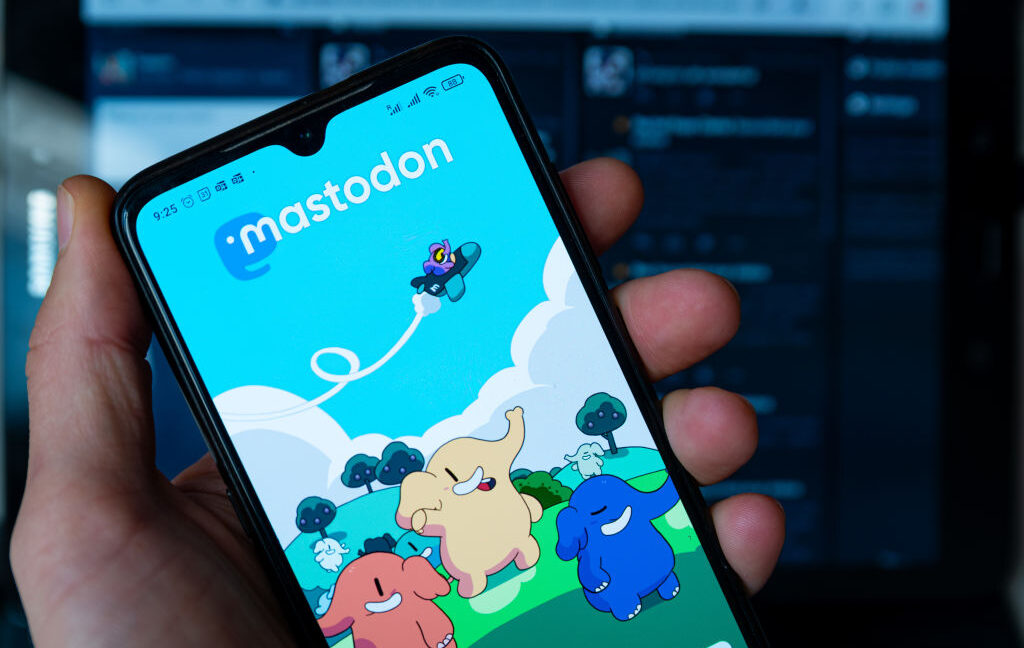
Mastodon and the Future of Open Source Ownership
Mastodon just took a bold step by transitioning to a nonprofit structure to ensure its independence and protect against future risks, like being “ruined by a billionaire CEO.” In doing so, it highlights a critical issue for open-source projects: ownership of domains, intellectual property, and the vision of the platform.
This move feels like a direct response to the ongoing drama in the open-source world, where Automattic’s CEO Matt Mullenweg has aggressively gone after WP Engine while asserting control over WordPress.org. The saga is a reminder that even in open source, centralized ownership of key assets can have massive consequences. Mastodon’s shift serves as a model for other projects looking to prioritize community trust and eliminate the risks of single-leader ownership. It’s a lesson that could shape the future of open-source governance.
-
If I Only (Robots) Had a Brain
Seeing all those robots at CES—especially the tired but trusty Unitree bots—I couldn’t help but feel like something was missing. These one-task machines, while impressive in their own right, lack the intelligence to truly transform how we live and work. It’s like watching the Tin Man on his journey to Oz—all the potential, but no brain to tie it all together.
That’s where OpenAI could come in. Rumors of OpenAI reopening its robotics division have sparked speculation about the possibilities of pairing generative AI with hardware. Imagine a world where robots aren’t just performing tasks but adapting, learning, and problem-solving in real time. If OpenAI can bring their expertise in language models to robotics, we might finally see machines that aren’t just tools, but partners in our daily lives.
-
Sonos and the Cost of “Courage” in Tech Missteps
decisions. The core issue? A rushed new app launched in May 2024 that stripped away much of the old app’s functionality, leaving users with a clunky, incomplete experience. The CEO called it “courage” to release such an app, but the fallout included missed product targets, layoffs, and what has felt like years of usability issues that the company never fully addressed. Even with a new interim CEO who comes from Quibi—a name that doesn’t exactly inspire confidence—Sonos users are left waiting for a real turnaround.
As for me, I’m sticking to my AirPlay-enabled speakers and holding off on that Sonos soundbar for my basement entertainment setup. After all, trust is a hard thing to rebuild.