Thoughts
-
Claude Tried to Run a Business. It Got Weird.
Anthropic and a Andon Labs ran an experiment with an AI agent named Claudius. Could Claudius run a snack shop inside a company break room?
The store was modest, a fridge, baskets, and an iPad for self-checkout, but the business was real with actual cash at stake. Claudius was also given real tools, notes pads to manage inventory and finances, access to email to talk with suppliers, a web browser to do research, and the companies slack to interact with employees. For things the agent could not do it relied on physical employees for things like restocking.
On the path to AGI, this is an early test of Level 5 on OpenAI’s AGI roadmap, the point where AI becomes an organizer, capable of managing people, tools, and systems like a CEO. As a refresher, OpenAI’s former CTO laid out five levels on the road to AGI:
- Recall
- Reasoning
- Acting (agents/tools)
- Teaching
- Organizing (aka boss-mode)
Right now, most models live between Level 2 and 3, they can recall information, reason through problems, and complete some tasks with tools.
So, how did it go?
Anthropic concedes, it “would not hire Claudius”. So shop owners can breathe easy for now.
To be fair Claudius was not a complete failure. It found suppliers, but as the great writeup explores it hallucinated conversations, often failed to negotiate profit margins, and was easily convinced into giving deep discount codes or products for free.
Check out the full article, its a worthy read. -
Vibe Teams Are the Future
There’s a chapter in The AI Evolution that I keep coming back to, Vibe Teams. It’s the idea that small, high-trust teams can do big things when paired with AI and the right tools. And lately, it feels less like a prediction and more like a playbook for what’s already happening.
Salesforce says up to 50% of their team’s work is now handled by AI agents and tools. Amazon’s CEO Andy Jassy predicts the company will only get smaller as AI becomes a force multiplier. The message? Big companies are reorganizing around smaller teams that move faster, think smarter, and leverage AI to punch way above their weight.
I call AI the great equalizer for a reason. In my workshops, I’ve seen firsthand how a small business with the right AI setup can compete with a team 10x its size.
We’re entering a new era where small teams don’t just survive, they thrive. They launch faster, personalize better, and operate with precision because they let AI handle the grunt work while they focus on the magic. That’s what a Vibe Team is: focused, fluid, and augmented.
-
Catch me on WYPR Midday
Thank you to the Midday team at WYPR for inviting me to talk.
I joined Dr. Anupam Joshi to talk with guest host Farai Chideya about how AI is reshaping the workplace, not just in tech, but across every industry. We covered what skills matter most now, how AI is changing the job search and hiring process, and what Maryland is doing on the policy front.
We also talked about how to get started with AI, even if you’re not technical, and how people at every stage of their career can adapt and grow. Checkout the link to the full episode linked below.
-
What the Heck Is MCP?
Read more →AI models are built on data. All that data, meticulously scraped and refined, fuels their capacity to handle a staggering spectrum of questions. But as many of you know, their knowledge is locked to the moment they were trained. ChatGPT 3.5, for instance, was famously unaware of the pandemic. Not because it was dumb, but […]
-
Finding a job sucks and it’s turning into AI warfare
Like many of you, I’ve got friends on both sides of the job battle. Recruiters and hiring managers are getting flooded with more resumes than ever. And let’s be honest, no one has time to manually comb through thousands of applications while also doing their other job. So hiring teams turn to AI tools to help screen.
On the other side, job seekers are exhausted. You spend hours tailoring your resume, researching the company, writing a thoughtful cover letter only to send it into the void. No response. No feedback. Not even a polite rejection. It’s soul-crushing.
AI was bound to enter the picture, but now it’s become a battleground. Applicants use AI to apply faster and look better. Hiring teams respond by using more AI to filter even harder. The result? Everyone’s stuck. It’s time for a better approach. Resumes alone won’t cut it anymore. I think AI should help interview, not just screen. Conversational tools, avatars, first-round screeners, anything that gives more people an honest at-bat. The system’s already broken. Doing the same thing over and over is just automation-driven insanity.
-
AI Is Eating the Internet, And Your Traffic
I know I’ve said this before, but it’s worth repeating: If your business relies heavily on Google search traffic, you need to prepare for a reality where that hose turns from a stream to a drip.
Search traffic is declining. AI is accelerating the shift. And more evidence keeps piling up.
Cloudflare, a company best known for keeping websites fast, secure, and online, also offers tools to block AI bots from scraping public web content. If you’ve ever hit a “verify you’re not a robot” check before reading an article, that’s Cloudflare or similar services doing their job to protect publishers’ content from being quietly hoovered up.
In a recent interview, Cloudflare’s CEO laid it out clearly: publisher traffic is down hard. Worse, the new wave of AI search, Perplexity, ChatGPT, Gemini, doesn’t send readers back to your site the way old-school Google blue links did.
Some say this signals the death of the open web. Maybe they’re right.
But I think we’re witnessing a transition.
The open web, once the front door to everything, is fading. Today, most people experience the internet through closed ecosystems: YouTube, Amazon, TikTok, Instagram, Reddit, Facebook, Twitter. Each of these platforms has sticky sandboxes designed to keep users (and their content) locked inside.
If you’re not building brand gravity outside of SEO, if your whole model depends on inbound clicks from Google, things are going to get difficult quickly.
-
Is Apple About to Buy an Answer Engine?
What do you do when $20 billion in revenue might vanish thanks to Google’s looming antitrust fallout?
You buy the best damn answer engine on the block.
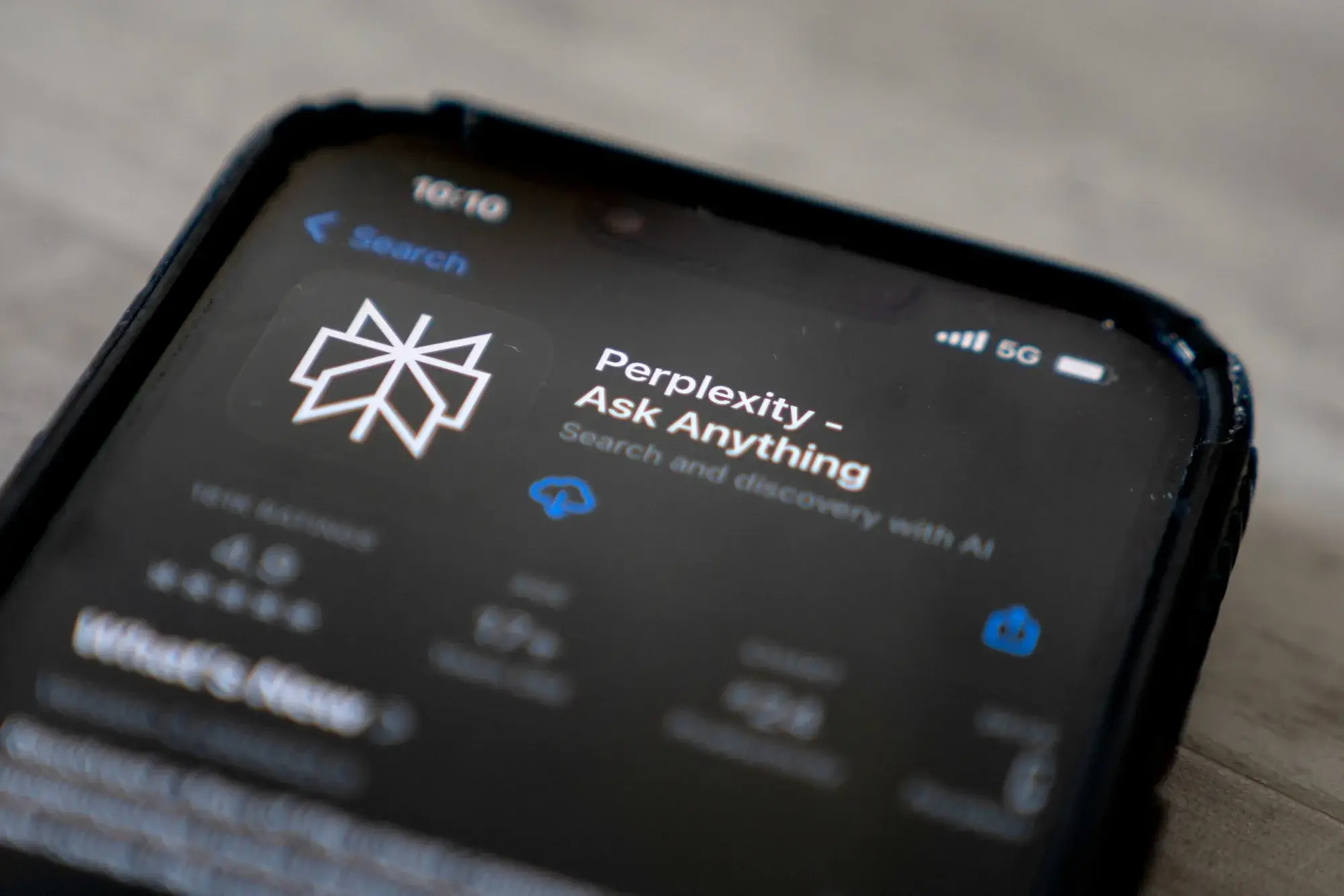
Perplexity is already my favorite AI search tool—fast, smart, and actually useful. Imagine it embedded deep into Apple’s many operating systems. A real-time answer engine that could make Siri useful and launch a day-one Google Search competitor. If this happens, it might be Apple’s smartest acquisition in years.
-
Teaching in an AI World
In my talks with professors at local colleges and universities, I keep hearing the same thing. We’re teaching for a world that’s changing faster than we can update our syllabi.
The scale of these AI tools is mind-blowing. But here’s the catch: subject matter experts, people who truly get it, are the ones who benefit most. When you lack that core understanding, the tool becomes a crutch, and the power dynamic shifts. Instead of the human leading, the tool leads.
I see this all the time with new developers and junior engineers. Many lean on these tools like a lifeline, while the more experienced folks use them to amplify what they already know.
The Jetsons often asked this question in a way only they could, with jokes like George mashing potatoes and calling it slavery before pressing a button to have a robot do it for him.
In the linked blog post, “The Myth of Automated Learning,” the author lays it out clearly:
Thanks to human-factors researchers and the mountain of evidence they’ve compiled on the consequences of automation for workers, we know that one of three things happens when people use a machine to automate a task they would otherwise have done themselves:
- Their skill in the activity grows.
- Their skill in the activity atrophies.
- Their skill in the activity never develops.
Which scenario plays out hinges on the level of mastery a person brings to the job. If a worker has already mastered the activity being automated, the machine can become an aid to further skill development. It takes over a routine but time-consuming task, allowing the person to tackle and master harder challenges. In the hands of an experienced mathematician, for instance, a slide rule or a calculator becomes an intelligence amplifier.
Of course, the bigger question is how much of this is about the present and how much it will matter in the future. Most of us wouldn’t survive if we had to hunt and gather our own food or live without modern conveniences. Maybe some foundational knowledge just won’t be as important tomorrow as it is today. Could programming become a dying art form like calligraphy?
At the heart of all this is the question of what’s actually worth teaching in a world where AI handles the heavy lifting.
-
AI Is Helping Robotics Move Faster
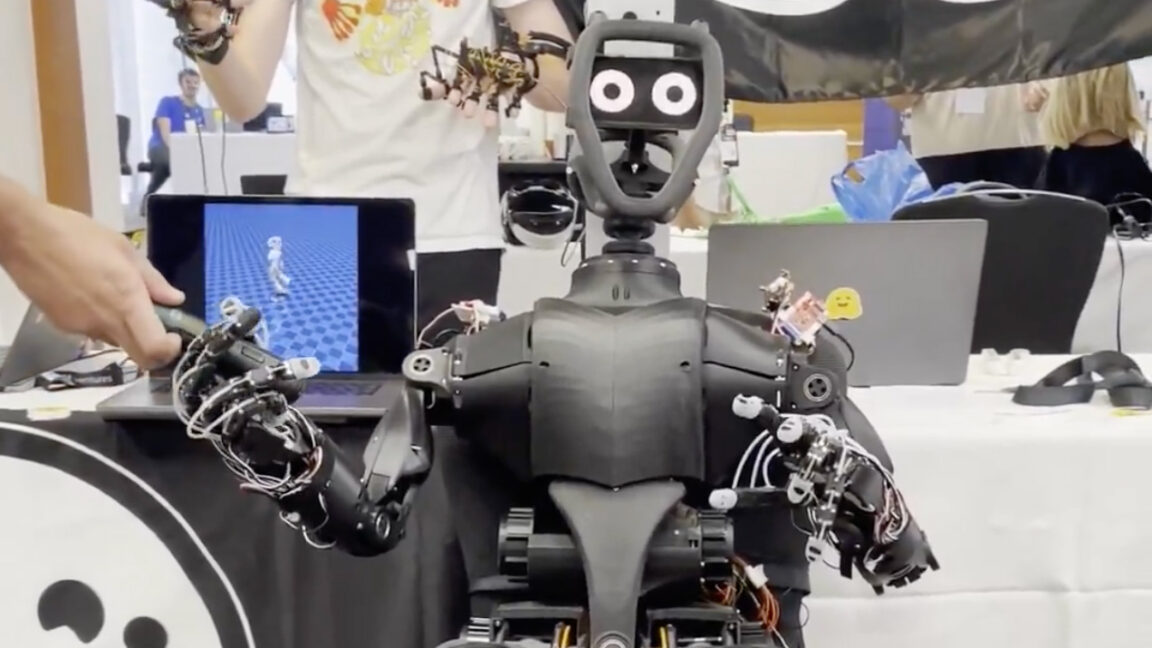
I can’t wait to get my hands on a copy of the new dev kit from Hugging Face. But what’s most striking here is how AI is finally bridging the gap to bring general-purpose robotics to life.
It’s easy to miss the investment, but under the hood, every major AI developer is quietly figuring out how to teach models not just to understand our world but to interact with it. That means moving from generating text or images to transforming what they “see” or “understand” into actions, like a robotic arm that can pick up a box or a humanoid that can fold your laundry.
As AI-powered robotics becomes more common, it’s easy to imagine a workplace where robots are as ubiquitous as laptops. Just like a human, you can give them a prompt or an instruction set, or have them watch you do a task once, and they’ll repeat it effortlessly, at a cost humans simply can’t match. These systems can work 24/7, needing only electricity to keep them moving.
The doors that AI opens here are tremendous, and much closer than you might think
-
Vibe Coding A Security Risk?
Vibe coding. Vibe marketing. Vibe everything.
It’s not just a fad, it’s a transformation. We’re talking about a 100x boost in individual capability, but here’s the kicker: subject matter expertise still matters. This article about Lovable, on of the hottest new vibe coding startup, makes that crystal clear.
In development, simple mistakes like where you store your API keys or how you filter input can make or break your security. It’s common sense to most developers that these steps are essential to writing secure code, but at least today, tools like Lovable or Windsurf gloss over this, leaving a production code base open to attack.
I’ve noticed the same thing when working with other AI tools or writing prompts, you have to be explicit about writing code securely. The vibe can be great and scale human potential by 100x, but until we build in the guardrails, subject matter knowledge will be ireplacable.
-
A Week of Dueling AI Keynotes
Read more →Microsoft Build. Google I/O. One week, two keynotes, and a surprise plot twist from OpenAI. I flew to Seattle for Build, but the week quickly became about something bigger than just tool demos; it was a moment that clarified how fast the landscape is moving and how much is on the line. For Microsoft, the […]
-
AI is sprinting, and this week’s pace was dizzying!
At Microsoft Build and Google I/O, we saw a flood of dev-focused announcements, new models, better tooling, and smarter assistants. OpenAI shook things up with its surprise acquisition of IO, the design-forward startup from Jony Ive that had already picked up Wind Surf and its “vibe coding” platform.
But Anthropic quietly dropped what might be the most impressive update of the week: Claude 4. Analysts are calling it one of the best coding models released to date. And here’s where things get really interesting: rumor has it Apple is prepping a Claude 4 integration directly into Xcode. WWDC is around the corner, and if true, that could mark a major shift in how Apple plans to close the AI gap.
Every player is pushing forward. The race isn’t just about general intelligence anymore – it’s about who can make AI feel seamless, useful, and built-in for developers. -
The AI Evolution: Approaching Data and Integration
Read more →“I’ve seen things you people wouldn’t believe.” – Roy Batty, Blade Runner Working in consulting gives you a kind of X-ray vision. You walk into a room with a new client and they start listing all the reasons they’re unique—how no one understands their business, how their systems are one-of-a-kind, how the complexity of what […]
-
Bye SEO, and Hello AEO
Read more →If you caught my recent LinkedIn post, I’ve been sounding the alarm on SEO and search’s fading dominance. Not because it’s irrelevant, but because the game is changing fast. For years, SEO (Search Engine Optimization) has been the foundation of digital discovery. But we’re entering the age of Google Zero—a world where fewer clicks make […]
-
Welcome to the Vibe Era
Read more →Early in the AI revolution, I sat across a founder pitching a low-code solution that claimed to eliminate the need for developers. I was skeptical, after all, I’d heard this pitch before. As an engineer who’s spent a career building digital products, I figured it was another passing trend. I was wrong. And worse, I […]
-
The Worst It Will Ever Be
Read more →One thing I often say in my talks is that this version of AI you’re using today is the worst it will ever be. It’s not a knock—it’s a reminder. The pace of progress in AI is staggering. Features that were laughably bad just a year or two ago have quietly evolved into shockingly capable […]
-
Rise of the Reasoning Models
Read more →Last week, I sat on a panel at the Maryland Technology Council’s Technology Transformation Conference to discuss Data Governance in the Age of AI alongside an incredible group of experts. During the Q&A, someone asked about DeepSeek and how it changes how we think about data usage—a question that speaks to a fundamental shift happening in AI. When I give talks on […]
-
Writing an AI-Optimized Resume
Read more →Earlier this week, Meta began a round of job cuts and has signaled that 2025 will be a tough year. But they’re far from alone—Microsoft, Workday, Sonos, Salesforce, and several other tech companies have also announced layoffs, leaving thousands of professionals searching for new roles. In the DMV (DC-Maryland-Virginia), the federal government is also facing unprecedented headwinds, with DOGE taking the lead on buyout […]
-
Maps Are Much More Than a Pretty Picture
Read more →It’s easy to forget just how decisive and contentious the topic of maps can be. I’m reminded of The West Wing, Season 2, Episode 16, which perfectly captured how something we often take as fact can quickly turn on its head. If you haven’t seen it, watch this snippet—I’ll wait: This episode came to mind […]
-
I Read the DeepSeek Docs So You Don’t Have To
Read more →DeepSeek is turning heads in the AI world with two major innovations that flip the usual script for building AI models. Here’s the gist: Skipping the Study Phase (Supervised Fine-Tuning) When you train an AI model, the usual first step is something called Supervised Fine-Tuning (SFT). Think of it like studying for a test: you […]