
Mastering AI with OpenAI & ChatGPT
A hands-on, practical workshop ideal for teams, departments, or individuals who want to go beyond the chat window and put OpenAI to real work across their tools, documents, and daily workflows.
Session Overview
This workshop is for anyone who uses ChatGPT, or is considering it, and wants to understand how to move from asking simple questions to building repeatable, governed, high-trust AI workflows. Whether participants are drafting documents, analyzing data, building Custom GPTs, orchestrating connected apps like HubSpot and Google Drive, or standing up their first AI agent with the OpenAI Agents SDK, this session teaches how to think with OpenAI’s models, how to extend them with Custom GPTs, Connectors, and Apps, and how to design workflows that feel less like prompting and more like delegating. Expect clear concepts, live demos, and real examples drawn from day-to-day business.
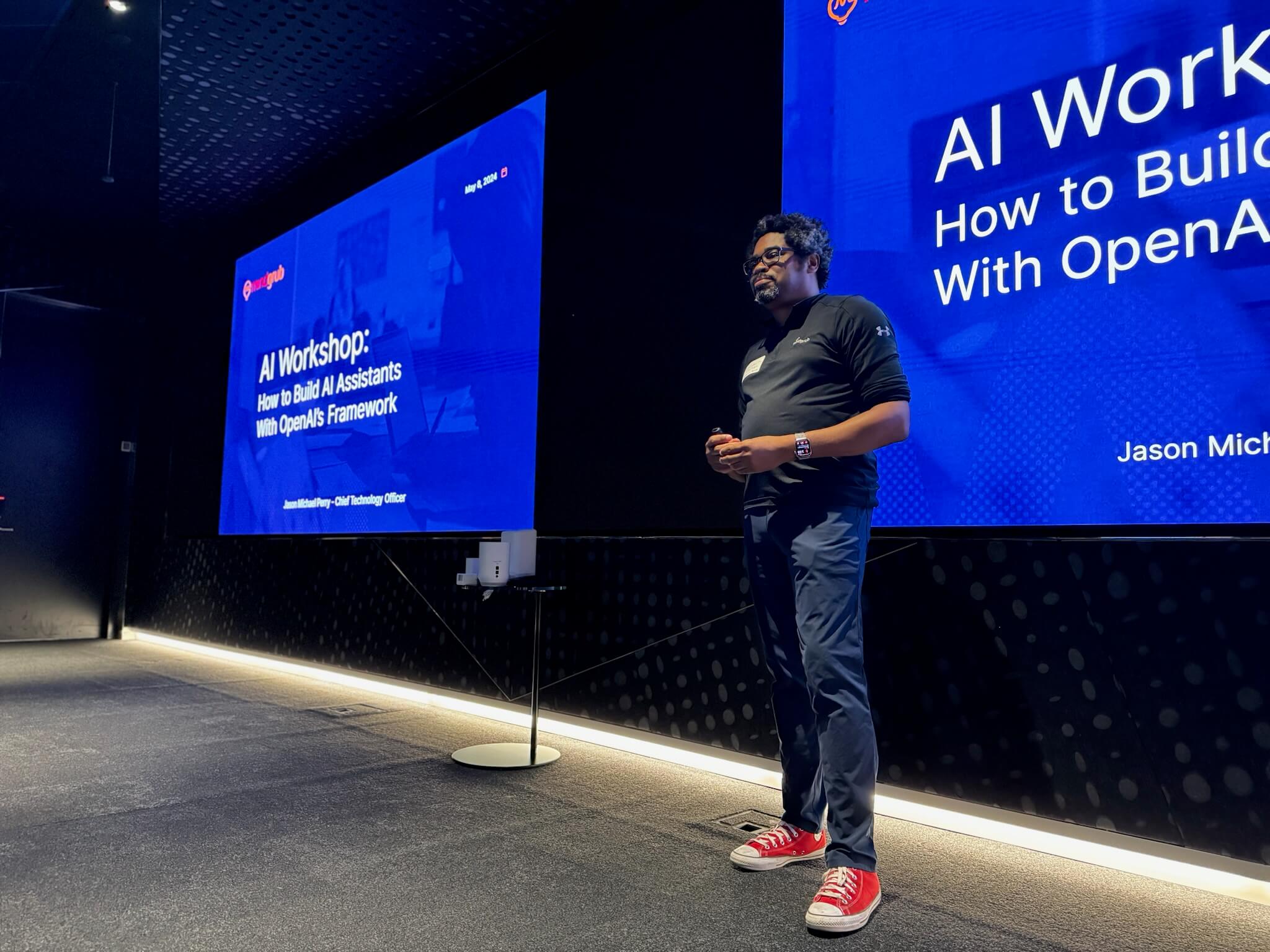

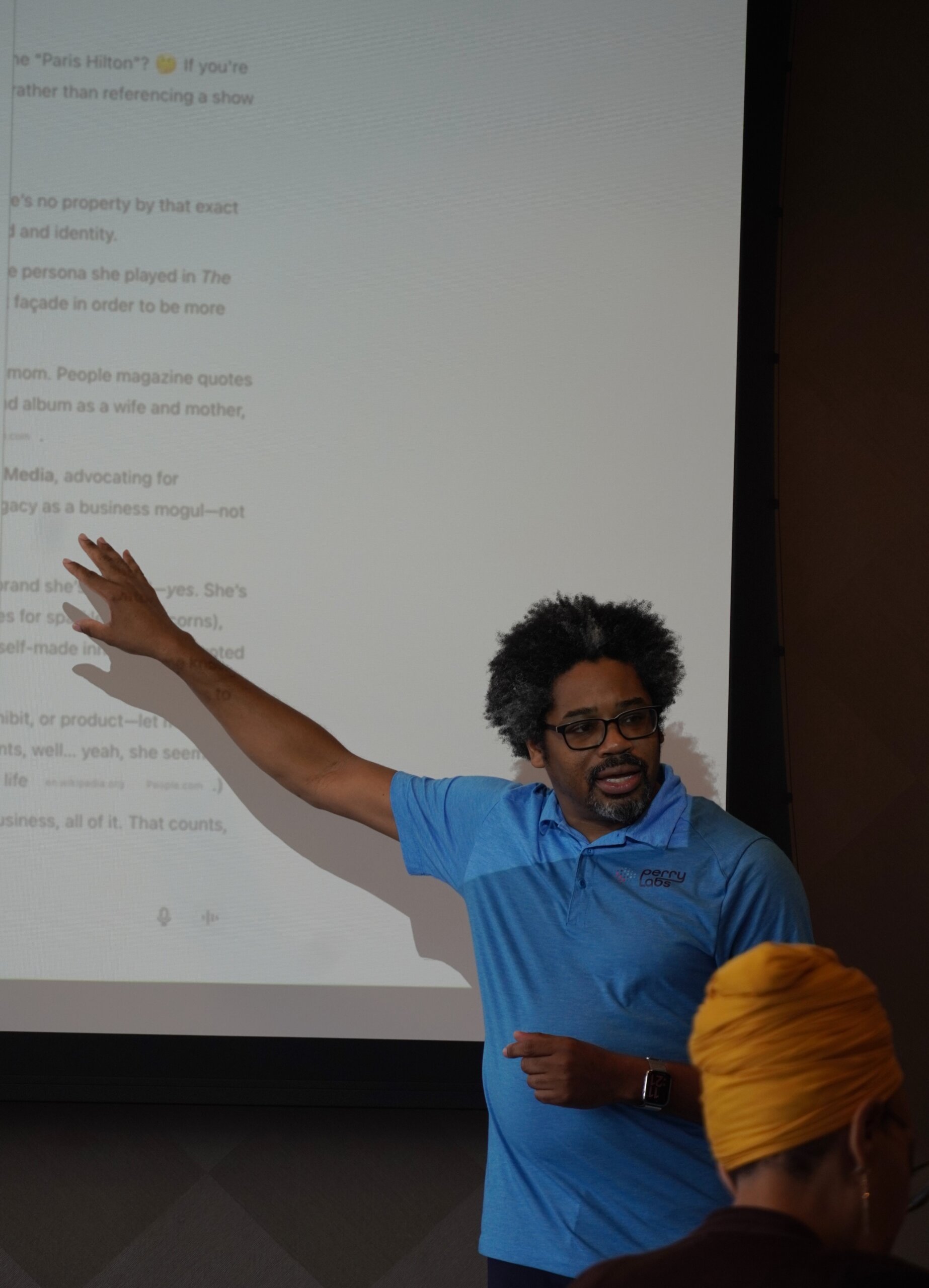
In this session, we’ll explore:
- What modern AI is (and isn’t), and why GPT models behave the way they do
- Why hallucinations happen, and how prompts, data, and real-time fetching reduce them
- The R-T-C-C-O prompt framework and how to write prompts that always get better answers
- How Projects, Canvas, and Agent Mode change the way work gets done
- How Custom GPTs, Connectors, and Apps extend ChatGPT into your actual business systems
- How Function Calling and the OpenAI Agents SDK give models the memory and the power to act
- How to build Vibe Teams that pair humans with agents to ship faster
- How to put governance, Shadow IT controls, and data boundaries in place
- Where AI is headed, and how to get ahead of it
What people are saying
Workshop Outline
I. Welcome + The AI Evolution Framework
This section sets the tone, introduces the flow of the session, and grounds participants in the bigger picture. Why is OpenAI a serious work platform and not just a chat toy? What does “evolution” actually mean from chatbots to agents to fully agentic organizations?
- Introduction to the format and flow
- How we’ll learn: concepts, demos, activities
- Overview of the tools used throughout the workshop
- Why the OpenAI ecosystem is our foundation
II. AI Fundamentals
A clear, beginner-friendly introduction to how modern AI models work, what they can actually do today, and why this moment matters for individuals and organizations.
- Narrow AI vs. Artificial General Intelligence, in plain English
- The five stages on the road to AGI: Chatbots, Reasoners, Agents, Innovators, Organizers
- How foundation models generalize, and where they still get confused
- Overview of OpenAI and the GPT model family, including GPT-5 and the o-series reasoning models
III. Core Concepts for Reliable AI Use
We break down the essential mechanics participants need to get consistent, trustworthy results from ChatGPT: prompts, context, tokens, and the real reasons hallucinations happen.
- What a prompt actually is
- The R-T-C-C-O framework (Role, Task, Context, Constraints, Output) and why it works
- Other practical frameworks (SPEAR, CRISPE, ICE, CRAFT) and when to reach for them
- Weak prompts vs. strong prompts, side by side
- What tokens are and why they affect cost and quality
- What a context window is, and how OpenAI’s longer-context models change the game
- Why hallucinations happen, and how to prevent them with grounding and real-time data
IV. The Importance of Data & Context
AI is only as good as the data it can see. This section explores how ChatGPT becomes dramatically more useful when it has the right context, and introduces the architectures that get real information into the model safely.
- Structured, unstructured, and semi-structured data
- Why context matters, and what happens when it’s missing
- RAG (Retrieval Augmented Generation) explained without the jargon
- Function Calling and the OpenAI Agents SDK: giving models memory and the power to act
- Organizational data realities: best-of-breed vs. ERP vs. the messy middle
- Data lakes, APIs, and orchestration layers that feed AI well
V. Exploring the OpenAI Ecosystem
A hands-on tour of the surfaces where ChatGPT does its best work, from quick chats to long-running projects to full agent task sessions.
- ChatGPT Projects for persistent context and shared workspaces
- Canvas: generating documents, apps, dashboards, and prototypes inside the conversation
- Agent Mode: turning a request into a multi-step task with its own working folder and progress tracker
- When to use Chat, when to use Agent Mode, and when to reach for Codex
VI. Custom GPTs, Connectors, and Apps
This is where ChatGPT stops being a general chatbot and starts becoming your team’s operating layer. Participants learn the three building blocks that customize OpenAI for specific work.
- Custom GPTs: packaged know-how with instructions, knowledge files, and actions for repeatable tasks
- Connectors: live read/write access to tools like Gmail, Google Drive, HubSpot, Salesforce, Slack, QuickBooks, Shopify, and more
- ChatGPT Apps: bundled extensions pre-configured for a role or department
- Live demo: querying a real business database through Function Calling and generating a chart in seconds
- How to evaluate what to build, what to buy, and what to wait on
VII. Assistants, Custom GPT Configuration, and Agentic Workflows
We move from one-off prompts to reusable systems. Participants learn the difference between a saved Custom GPT, a configured Assistant, and true agentic workflows that plan, act, and reflect.
- What an Assistant is, and how it differs from a prompt
- Configuring Custom GPTs with instructions, knowledge files, Connectors, and Actions for a specific role
- What makes a workflow agentic: planning, tool use, reflection
- Scheduled tasks and recurring agents that run without being asked
- Operator and the idea of always-on, autonomous agents
- Building your first simple agentic workflow
VIII. Vibe Teams and the New Organizational Model
A modern look at how AI is reshaping org charts. Traditional MBA-style hierarchies are giving way to small, cross-functional, AI-augmented “Vibe Teams” that ship more with fewer people.
- Why the most valuable companies in the world are actively shrinking
- MBA orgs vs. AI-native orgs: silos and handoffs vs. networks and orchestration
- Why small teams win (communication complexity, fewer handoffs, faster loops)
- How a Vibe Team combines humans, agents, and connected tools
- The emerging role of the Chief AI Officer and AI fluency across every department
IX. Governance and Responsible AI Use
A practical discussion on using ChatGPT safely at home and at work, with special attention to the Shadow IT problem most organizations are already living with whether they know it or not.
- The Shadow IT risk: employees are already using AI, with or without permission
- Training exposure, privacy, and confidentiality: what goes into a model, and what comes back out
- Opt-out is not the default, and why that matters for free tiers
- Enterprise controls, contractual protections, and what to look for in a vendor
- Jurisdiction and regulatory considerations (EU/UK vs. U.S.)
- Building governance that enables use instead of blocking it
X. A Look to the Future
We close with a forward-looking discussion on where OpenAI and the broader AI ecosystem are headed, and how individuals and organizations can prepare.
- AI as the operating layer across every tool your team already uses
- What every professional should start doing this quarter
- The future of agents and always-on assistants
- Longer context, persistent memory, and the end of “starting over” with every chat
Additional Resources
- Workshop FAQs – Find answers about what’s included, policies, and how to prepare.
- Resources & Downloads – Access course files, templates, and useful links.
- Locations & Venues – View upcoming cities and venue details, or request one near you.
Upcoming Workshops
If you have questions or would like to schedule a private class, reach out and contact us.
Upcoming Workshops
If you have questions or would like to schedule a private class, reach out and contact us.