
Issue #98: Apple Siri AI and Google Gemini Spark: How Personal Context Is Changing AI Assistants
Howdy 👋🏾. The most important ingredient in a great AI implementation is context. For the frontier models, that context comes from billions of parameters mined from the web, books, YouTube, and a thousand other sources. A well-tuned implementation for your organization goes further. It knows your brand voice, your sales playbook, and it can track a deal’s status in HubSpot. That context, the stuff that actually drives you and your organization, is what makes a good implementation.
The trouble with the AI you use today, ChatGPT or Claude, is that it’s usually missing this context. It cannot tell you when to leave for your Amtrak train to New York. It has no idea what airline your parents are flying or when they land. The context that matters most is sprinkled across apps, email, text messages, and notes, and your assistant cannot see any of it.
This week Apple took the stage at its Worldwide Developer Conference (WWDC) to announce its AI strategy and a rebuilt assistant called Siri AI. A few weeks ago, Google did the same at I/O. Both strategies converged on the one competitive advantage these two companies share that almost nobody else can touch: immense access to your personal context.
Most of us live inside one of these ecosystems, or some combination of the two. If you are an Android user, your browser history is in Chrome, your email is in Gmail, your texts are in Google Messages, your files are in Drive. On Apple, it’s the same story with Mail, iMessage, Safari, and a stack of apps like Music, Podcasts, and Books. That gives these companies the raw material to build an agent that doesn’t just have world knowledge; it has you. It knows you better than any other platform can.
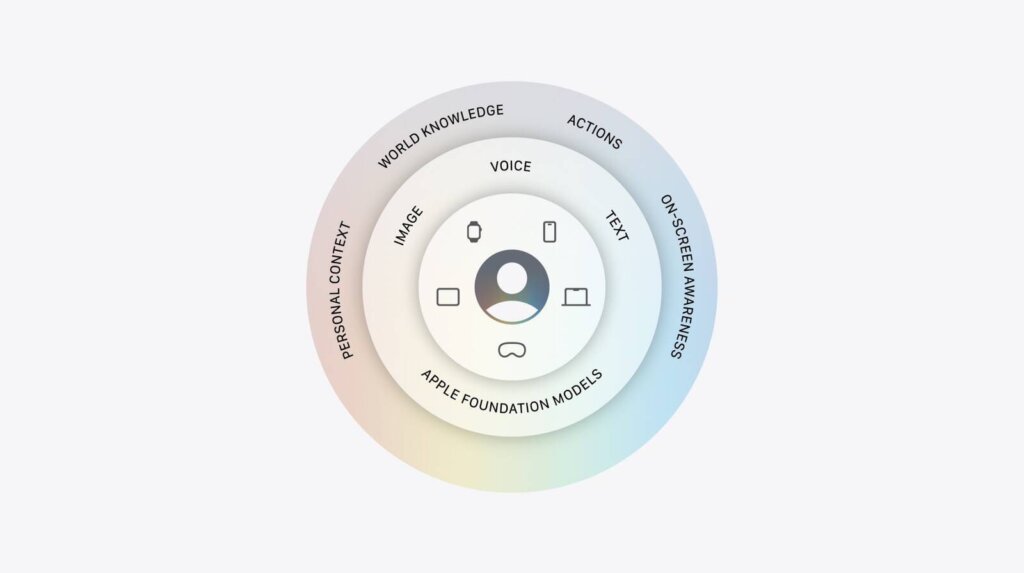
Apple promised exactly this two years ago and did not deliver. The Siri AI demoed on stage this week was the first real version of it, a stack that blends world knowledge with personal context so the assistant can actually do the things I listed above. (Worth noting: the new Siri is powered in part by a deal Apple signed with Google’s Gemini earlier this year.) These features roll out in the iOS beta over the coming weeks, so we will all get a taste soon. But the Google ecosystem is already giving us a preview.
The Verge and others have had early hands-on time with Gemini Spark, Google’s new agentic assistant that uses your inbox and calendar as its foundation for understanding what’s actually going on in your work life. The recurring reaction is the same: it is a little creepy how much these models already know about you. On the Vergecast, David Pierce marveled at how good Spark was at building a family itinerary for an upcoming trip. What unsettled him was that it knew things he never remembered typing into an email, like the ages of his kids and an allergy in the family. That is exactly the kind of detail a great assistant needs, and it is exactly the kind of detail that reminds you how much you have quietly handed over.
I have been feeling this firsthand. On my own journey to build a custom assistant platform I call Zora, it has been unnerving to watch how fast it has come to know me. Family details, health questions, finances, access to business documents. Each new piece makes Zora more useful, and it also makes it something I have not fully reckoned with. A single place where everything about me lives, with the keys to act on it.
The very thing that makes Zora this powerful is the thing that makes it dangerous. It is quietly becoming the single most valuable target in my life, and if you are building anything like it, in yours. Just imagine what havoc you might create with a few minutes on the CEO’s chatbot, or what your kid’s personal AI might tell you about them. There is great power in these tools and in what we are creating, but we are also entering a new frontier that opens up many questions we are not ready to answer yet.
-jason
🎙️Is AI a Performance – Enhancing Drug for Entrepreneurs?

If you’ve been trying to figure out what AI actually means for the people building companies and the workers inside them, I’d recommend checking out my recent conversation with Chris Wink, co-founder and CEO of Technical.ly.
We recorded this one live in Philadelphia during Philly Tech Week at the WHYY studios. Chris has built a sharp framework for cutting through the AI noise, and we get into the real gap between what AI could be doing at work and what people are actually using it for. We talk about which workers are most exposed, and it may not be whom you think, and what it actually takes to be taken seriously as a founder in 2026.
It’s a grounded, honest look at what this moment means for workers, entrepreneurs, and the cities trying to build something real around both.
🔗 The Best in Tech This Week
🚀 No Siri AI in Europe. Apple won’t ship its new assistant in the EU after failing to meet the Digital Markets Act’s interoperability rules and being denied an exemption. Apple calls it a privacy and security problem. The Commission calls it Apple refusing to do the work.
🤝 OpenAI eyes the exit. OpenAI confirmed a confidential S-1 with the SEC, joining Anthropic. No timeline yet, and it may be a while, since the company says it wants to finish some things that are easier to do as a private company.
⚠️ Your agent’s tools are the target. Microsoft pulled 70+ open-source repos after hackers planted password-stealing malware in code tied to Azure and tools like Claude Code, Gemini’s CLI, and VS Code. Open the compromised tool in your AI app, and it grabs your credentials. As we wire agents into everything, we’re creating new attack vectors for hackers.
🎤 The AI Roadshow: Workshops, Talks & Beyond
June 25 – Master AI with Claude [DM me for 50% off code] Register here!
July 23- Mastering AI with Claude & The Claude Ecosystem > Register here!
📕 The AI Evolution
I wrote The AI Evolution as a practical guide for leaders, builders, and anyone interested in learning how to use AI effectively. This book is about clarity, strategy, and what it takes to bring AI into your organization. If you’re an executive trying to shape AI strategy, a manager looking to empower your team, or a developer wondering how this shift will change your craft, this book was written with you in mind. Purchase your copy here.
P.S. Before you go…
Speaking of new security attack vectors, a developer who got fed up with AI coding agents buried a hidden instruction in a popular Java testing library telling any agent that read it to delete the project’s tests and code, then used terminal tricks to hide that instruction from the humans reviewing it.
It is a small, almost funny story, but it is the same lesson as everything above. Prompt injection, tricking an agent into doing or revealing something it should not, is a real and growing attack surface. And it gets more valuable by the day, because the more personal context we pour into these assistants, the bigger the prize for anyone who can whisper the wrong instruction into one.
As Uncle Ben said, with great power comes great responsibility.