
Issue #96: The Bits We’re Pouring Down the Drain
Howdy 👋🏾. Last year, I had a podcast conversation with WAMU’s Jenny Abamu about data centers and the growing angst in Prince George’s and Montgomery County here in Maryland. Of course, that uproar has since spread across the US, with New York proposing a three-year moratorium on new data center construction.
Something Jenny said that has stuck with me: through all the protests and regulatory push, very little is being said about changing our consumption habits and how we as individuals consume data.
Think about it. We’ve had “turn the lights off when you leave a room” and “don’t leave the faucet running while you brush your teeth” ingrained in us since childhood. Conservation of energy and water became part of our culture. But how many of you question downloading more movies to a tablet than you need before a long trip? How many of you click to redownload a large file or video rather than search for it on your local machine? How many of you stream the same show over and over instead of downloading it once?
Before this data center conversation, we all looked at those digital bits soaring through the air as cheap or free. AI and its immense computing needs for training have put a huge lens on data centers, but these centers power everything from TV and music streaming to websites and the many applications we depend on daily. All of this moving and storing of data comes at a cost.
This mindset of data being cheap leads to waste. It leads to product design that worries little about how large things are or how big any of our personal data footprints might be.
Take Netflix as an example. When you download a movie for offline viewing, that file eventually expires, not because the content changed, but because a small digital license timed out. Instead of simply refreshing that license, the app has you redownload the entire file. We’re talking gigabytes of data moving across infrastructure when a transaction a fraction of that size could have done the job. That’s a product design choice, and it exists because the cost of moving data hasn’t been high enough to make efficiency a priority, much like how cheap gasoline made it easy to design vehicles that got 12 miles to the gallon without anyone blinking.
So as the conversation on data centers continues, maybe it’s time for all of us to think about the many bits we’re pouring down the faucet.
–jason
🎙️Why are Maryland’s Electric Bills Rising?
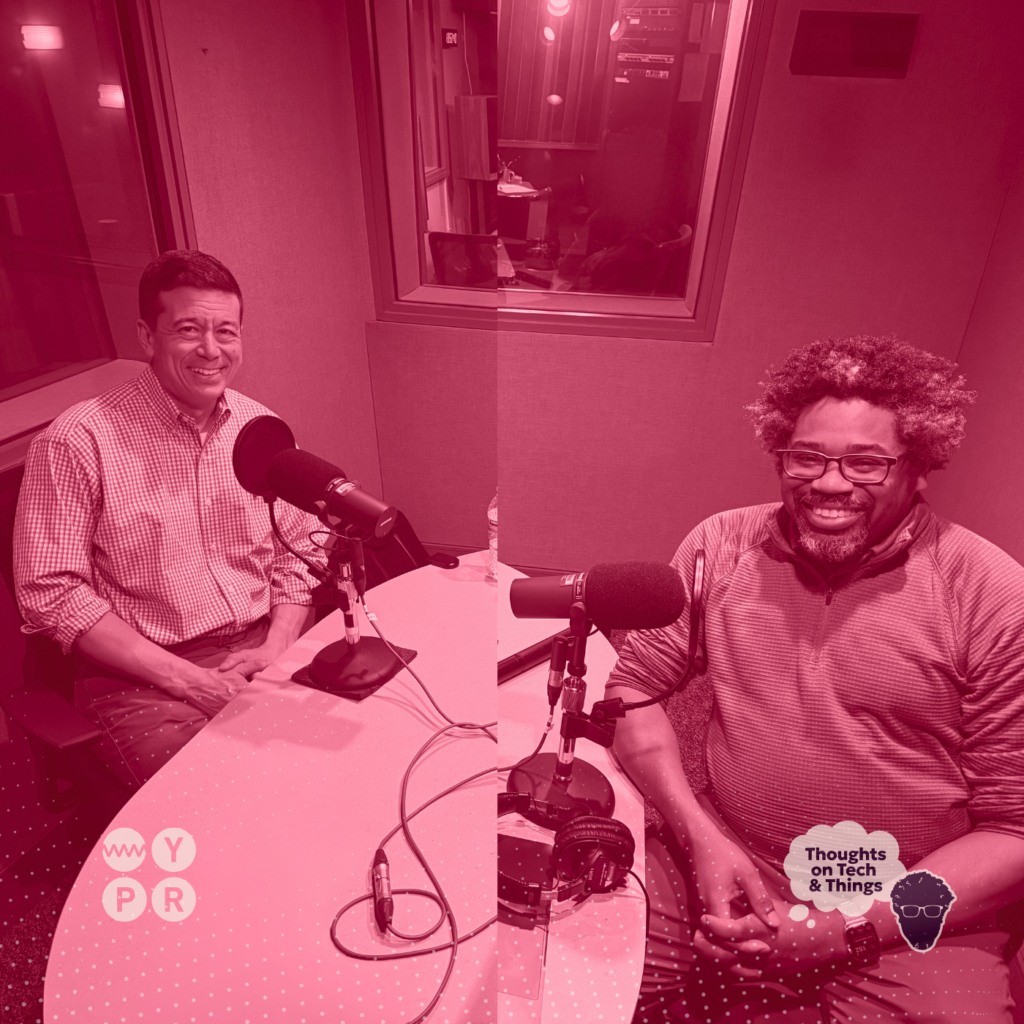
If you’ve been wondering why your electricity bill keeps going up, I’d recommend checking out my recent conversation with Jason Stanek, Executive Director of Government Services, at PJM Interconnection. We get into how the power grid actually works behind the scenes, from the different roles of generation, transmission, and distribution, to what’s really driving costs higher right now.
It’s not just one thing. We talk about the growing demand from data centers and AI, how supply and infrastructure are struggling to keep up, and why states like Maryland are feeling it more than others. It’s a useful look at how something most people don’t think about every day is starting to have a very real impact on all of us.
🔗 Best In Tech This Week
Salesforce Goes Headless. No Browser Required. – How we interact with software is changing, and one of the best examples of that is Salesforce going headless. Every capability is now an API, MCP tool, or CLI command. This is Salesforce acknowledging that MCP and AI are becoming the doorway to our data, and our user interface is becoming the AI agents and bots.
Another Day Has Come – April 1st Apple celebrated its 50th birthday, and in a series of interviews, Tim Cook said he’s not going anywhere. Well, “anywhere” did not mean staying as CEO, apparently, as he moves to executive chair, and John Ternus is now CEO. Gruber nails it: Apple needed an operator in the 2010s, and heading into the AI era, they need a product person again, which is exactly what Ternus is.
Leaked Deck Reveals StackAdapt’s Playbook for ChatGPT Ads – The ads are coming to ChatGPT. New leaks have some details on what pricing might look like and what these new ads may look like. CPMs of $15 to $60, a $50,000 minimum spend, and placements triggered by prompt relevance right when someone is researching a product.
🎤 The AI Roadshow: Workshops, Talks & Beyond
April 20-24 – Black Is Tech
May 4 – 8 – Philly Tech Week & Technical.ly Builders Conference
May 14 – WTCI AGILE
June 9-10 – Developer Week
📕The AI Evolution
I wrote The AI Evolution as a practical guide for leaders, builders, and anyone interested in learning how to use AI effectively. This book is about clarity, strategy, and what it takes to bring AI into your organization.
If you’re an executive trying to shape AI strategy, a manager looking to empower your team, or a developer wondering how this shift will change your craft, this book was written with you in mind. Purchase your copy here.
P.S. Before we go…
Anthropic exposed 512,000 lines of its own code. A debugging file was accidentally shipped inside the Claude Code tool, sitting publicly accessible and downloaded within hours. No hack. No AI failure. Just human error.
The company building one of the smartest AI systems in the world… reminded us of the weakest link – human error.