
Issue #101: What Anthropic Changed About Memory
The way Claude Cowork knows you is changing. Let’s start with the basics. Claude, like ChatGPT, has kept a memory of you for a while now. It listens through your conversations and picks out what seems valuable for the long term. Maybe you mention a favorite food, where your kids go to school, or a proposal you’re working on. That memory becomes context for future chats, so a brand-new conversation can recall those things without you restating them in a new prompt. Claude can also search your previous chats and use those results to fill in the gaps when memory comes up short. You can see all of this and edit it under Settings > Memory, where entries are grouped by topic or tied to the people you’ve mentioned. Worth noting: memory is on by default for Free, Pro, and Max plans, but Team and Enterprise organizations have to turn it on explicitly.
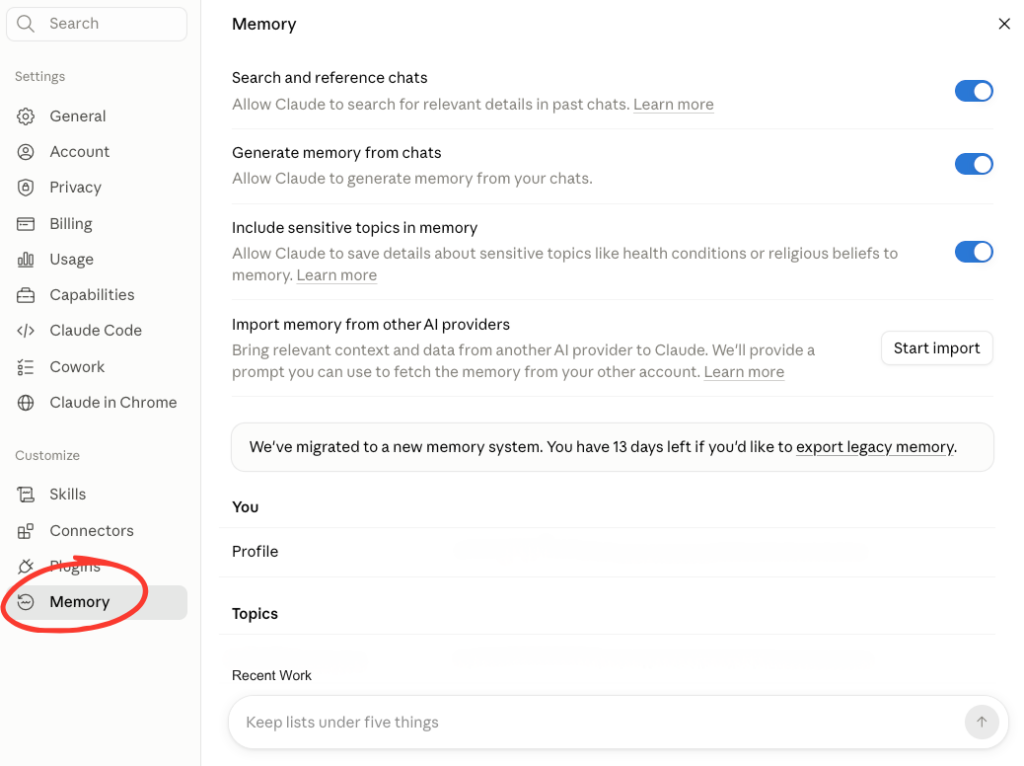
Claude Cowork has worked differently. When you create a Cowork thread or a Cowork project, memory stays isolated to that thread or project, separate from the memory in your chats. (Claude Code is its own animal entirely, with a context system that has nothing to do with any of this, so set it aside for today.) It lets a project stay focused, and when I’m building something specific to a client, I can keep a firewall between that work and everything else, so one client’s context doesn’t bleed into another’s, or turn how we do something for one group into how we do it for everyone. You can see the distinction inside a Cowork project by looking at its project-specific memories, which are unique to each project.
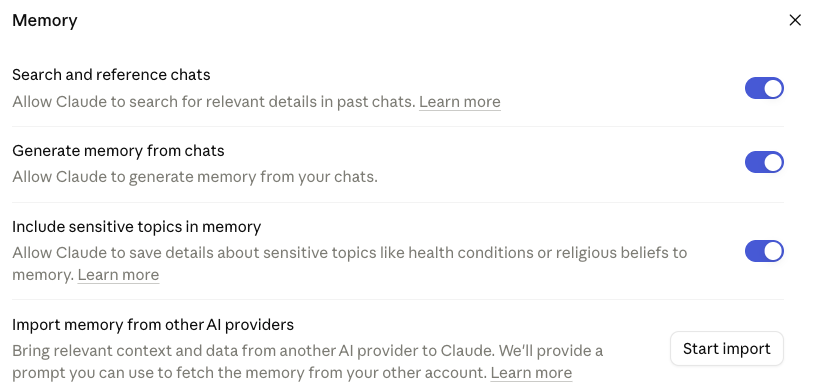
Then a UX update made chat and Cowork feel interchangeable with a new toggle button, and that caused confusion. Why does chat instantly fill in the gaps in my prompt, while Cowork has no idea who I am?
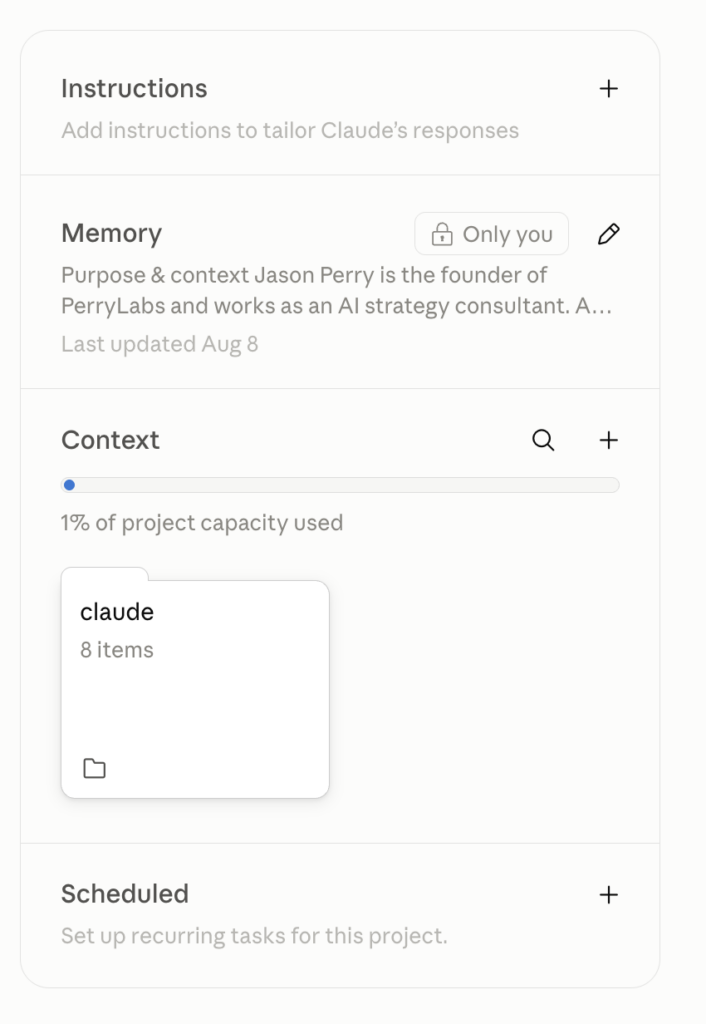
To clear that up, on August 25th, Anthropic made memory work across chat and Cowork. Your Cowork projects and threads can now tap into a larger shared memory, while still keeping their own separate memory space.
Depending on how you use Claude, this could be a huge positive. But if you find that shared memory causes more confusion than it solves, there is no toggle to keep Cowork isolated. Your choices are to turn memory off altogether, or to take advantage of the fact that, for now, this only applies to Cowork in the cloud. Sessions that run locally on your own machine don’t use memory at all. Under Cowork settings, switch off “Run new tasks in the cloud,” and new tasks stay on that computer. That will maintain memory isolation, at least until Anthropic decides otherwise, but you lose the ability to reach those projects from your phone or another machine.
-jason
🎙️Who Owns Your Company’s Intelligence?
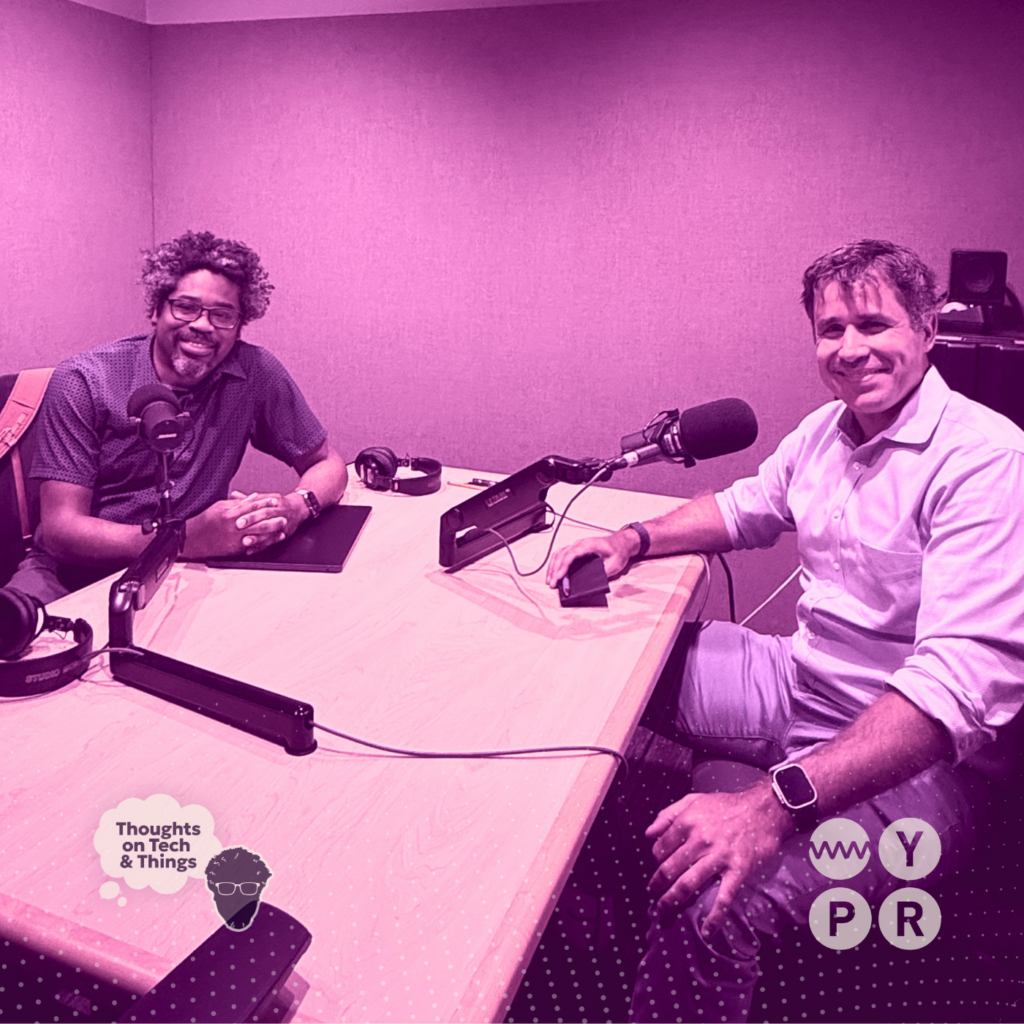
If you’ve been wondering who actually controls the AI your business runs on and whether that should concern you, check out my recent conversation with Chris Brandt, CEO of UpSurge Baltimore and Managing Director at Audacious Capital.
We get into the growing fight over open versus closed AI models — guardrails, censorship, security, and trust. What it costs to build your own intelligence versus buying it from someone else, and why token costs may be the least important factor in that decision. We close by bringing the global debate over AI sovereignty home to Maryland and what it means for the region’s businesses, investors, and entrepreneurs.
🔗 Best In Tech This Week
🔓 Why AT&T Is Betting Big on Open-Weight AI – More and more big business is looking at open-weight models as the way to go, and Meta’s announcements this month suggest the field is only getting deeper.
💻 Meta’s New Open-Weight Model Can Run AI Agents on Your Laptop – Meta is making a huge bet on open weights as a complement to proprietary models, with capable models you can run locally and a pledge to release the weights of Spark 1.2, one of its top-end models.
💧 How Claude’s Text Watermark Works – Claude is adding an invisible watermark to its text output, making it possible to estimate whether a passage was written by AI. This is EU AI Act compliance, and the other major labs signed the same code of practice, so expect everyone’s version shortly.
✍️ How to Spot AI Writing – As I keep hearing more about AI watermarking and what separates good AI writing from bad, this is an interesting take on how to spot it.
🎤 The AI Roadshow: Workshops, Talks & Beyond
Sept. 30: BannerX
Oct. 5-7: Agentic AI North America
Oct. 20: DC Startup & Tech Week
Oct. 27: TEDCO’s Entrepreneur Expo
📕 The AI Evolution
The AI Evolution is a practical guide for leaders, builders, and anyone interested in learning how to use AI effectively. This book is about clarity, strategy, and what it takes to bring AI into your organization.
If you’re an executive trying to shape AI strategy, a manager looking to empower your team, or a developer wondering how this shift will change your craft, this book was written with you in mind. Purchase your copy here.
P.S. Before you go…
I’ll be moderating the data center panel conversation at the BannerX conference next month, and I think I just found one of my questions: Is Jason Kelce and Liquid Death’s plan to cool our data centers with pee actually practical? Jokes aside, reclaimed water is already standard practice. Plenty of data centers run on treated municipal wastewater rather than drinking water, so where the water comes from is a serious policy question. It’s also a very funny video. Watch it.