
Issue #99: The Flat-Rate AI Party May Be Over
Howdy 👋🏾.
A few months ago, news broke that Anthropic was phasing out its flat monthly fee for enterprise plans and migrating those customers to metered plans that charge by the token. Businesses already on Anthropic’s enterprise plan have until contract renewal for the change to take effect, but the writing is on the wall. The days of free tokens and flat-priced AI models may be numbered, especially for businesses and business users.
CFOs, now charged with adding line items for token and AI usage to their 2027 financial plans, are starting to ask their technical teams how much this will cost and, more importantly, how to measure the ROI to show it’s worth pulling budget from somewhere else.
This change in the winds has made IT leaders increasingly interested in open-weight models. These are models you can download for free from platforms like Hugging Face and run on your own. They’re called open-weight because the trained parameters, the weights the model learns during training, are published openly so anyone can download, inspect, and run them on their own hardware. Some open models are also trained partly on freely available datasets like Common Crawl, a massive downloadable archive of web pages that anyone can use to train their own custom models. A business embracing a mix of open-weight models can deploy something like Google’s Gemma 4 on its own infrastructure and cover the cost of maintaining the model instead of paying on a per-token basis.
These models are not as good as the frontier models from companies like OpenAI and Anthropic, but good enough for plenty of routine tasks in an organization, tasks that may not require the horsepower a power user or a software engineer needs.
This balance, deciding what model to use for what task and when, is increasingly something CFOs are asking their AI teams to figure out. That push is shining a spotlight on platforms like OpenRouter, which just raised $113 million at a $1.3 billion valuation, offering a platform that dynamically routes between more expensive frontier models, cheaper low-cost models, and your own open-weight models based on the user’s needs. It has also opened the door for model-agnostic platforms like Mozilla’s Thunderbolt, which lets a company give its teams a choice between the AI models they have access to and potentially limit what they can do based on their role in the organization.
As I often say, these are the AOL days of AI, and it will take a while to see how it ultimately plays out. But those days of a flat monthly bill with all the tokens you can eat may be behind us, especially as Anthropic and OpenAI head toward IPOs and need to show a path to revenue.
– Jason
🎙️Who Wrote That, AI or You?
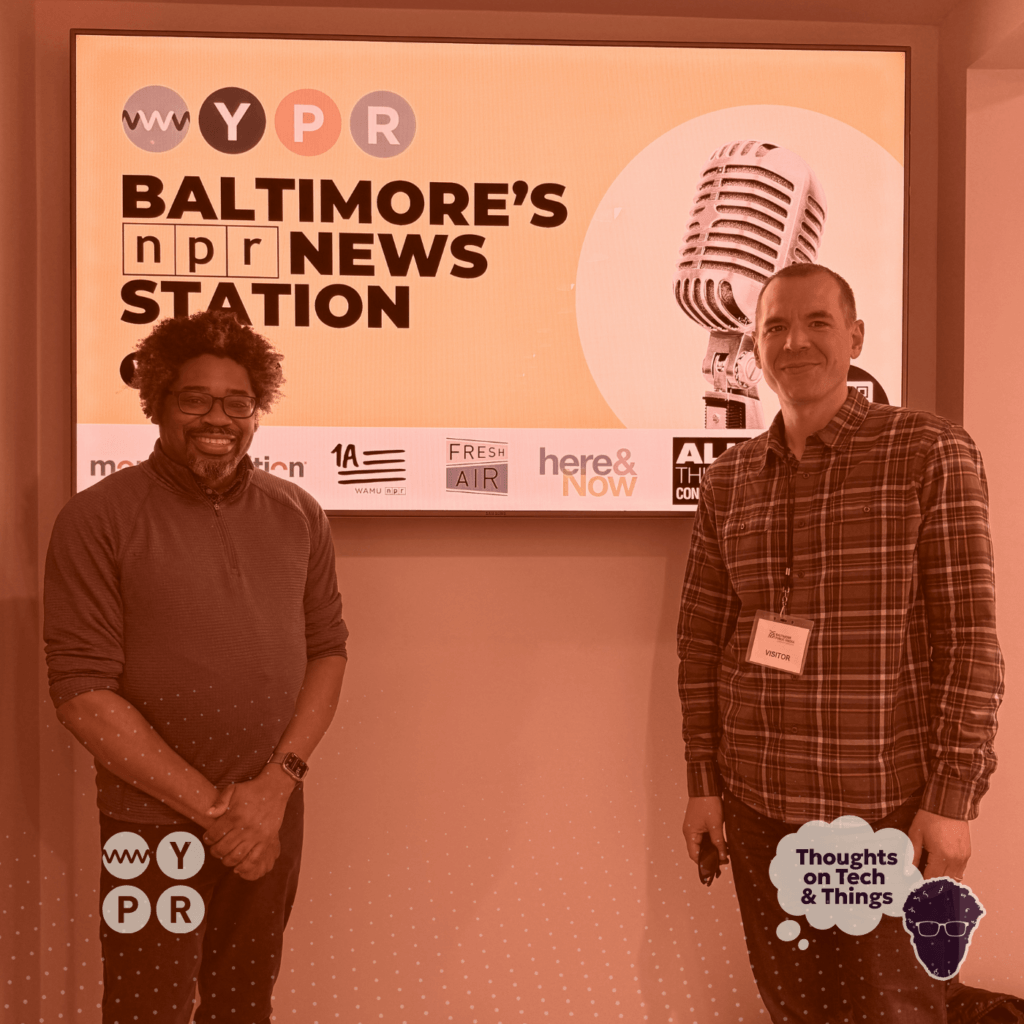
If you’ve ever wondered how schools are supposed to handle AI when the line between “cheating” and “using a tool” keeps moving, I’d recommend checking out my recent conversation with Joseph Thibault, founder and CEO of Cursive Technology.
We get into one of the most contested questions in education right now: when AI can write anything, how do you know if the thinking belongs to the person who submitted it? Joseph has been tracking this problem since before most schools had a policy for it, and we talk about why the old definition of plagiarism doesn’t map onto a world where AI can think while a student writes every word — or where detectors end up flagging innocent students for work they genuinely produced.
It’s a good look at a problem most institutions are still figuring out in real time, and the kind of nuance that gets lost when the conversation stays at “AI bad” or “AI fine.”
🔗 Best In Tech This Week
🚗 Ford rehires engineers it displaced with AI – This is a story that’s getting a lot of press. My read is that so many businesses are rushing to become AI native, or to show how much they’re benefiting from AI, that they’re jumping the gun.
📊 The AI jobs debate just got messier – Speaking of AI’s impact on jobs, some reports show job growth, though I suspect that’s short-lived. From my work, it’s obvious that it’s easier for small and new businesses to adopt AI than to take on the change management that comes with moving a large business like Ford.
🔬 Anthropic’s labor market study – This report from Anthropic is from March, which feels like decades in the world of AI. It lines up pretty well with the reports cited in the article above that cite Ramp and Revelio Labs. The places seeing the biggest impact (coding, customer service, data entry, finance) are the most likely to see disruption, but the impact is coming to many other sectors, just not as quickly.
🎤 The AI Roadshow: Workshops, Talks & Beyond
July 23 – Mastering AI with Claude & The Claude Ecosystem > Register here!
📕The AI Evolution
I wrote The AI Evolution as a practical guide for leaders, builders, and anyone interested in learning how to use AI effectively. This book is about clarity, strategy, and what it takes to bring AI into your organization.
If you’re an executive trying to shape AI strategy, a manager looking to empower your team, or a developer wondering how this shift will change your craft, this book was written with you in mind. Purchase your copy here.
P.S. Before we go …
Plenty of businesses have jumped on anti-AI sentiment, especially as that feeling keeps growing among younger people. The newest and most unlikely is Polaroid, whose new beach billboard goes after the water that data centers drink up. It is all part of the wider backlash against data center buildouts, the same ones driving up the cost of memory, hard drives, and computer tech everywhere, with Apple raising prices on its computers as memory and storage costs skyrocket.